We have compiled a list of manufacturers, distributors, product information, reference prices, and rankings for Non-ferrous metal processed products.
ipros is IPROS GMS IPROS One of the largest technical database sites in Japan that collects information on.

Non-ferrous metal processed products Product List and Ranking from 5 Manufacturers, Suppliers and Companies

Last Updated: Aggregation Period:Dec 17, 2025~Jan 13, 2026
This ranking is based on the number of page views on our site.

Non-ferrous metal processed products Manufacturer, Suppliers and Company Rankings

Last Updated: Aggregation Period:Dec 17, 2025~Jan 13, 2026
This ranking is based on the number of page views on our site.

  1. 松井製作所 Osaka//Ferrous/Non-ferrous metals
  2. メイワ Kanagawa//Manufacturing and processing contract
  3. 橋永金属 Tokyo//Trading company/Wholesale
  4. マスタニテック Osaka//Machine elements and parts
  5. ナツメ Aichi//Manufacturing and processing contract

Non-ferrous metal processed products Product ranking

Last Updated: Aggregation Period:Dec 17, 2025~Jan 13, 2026
This ranking is based on the number of page views on our site.

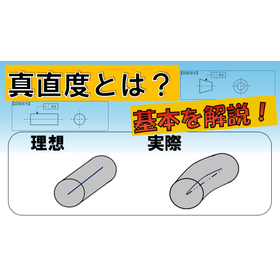
  1. Geometric Tolerances for Shipbuilding: What is Straightness? An Explanation of the Basics! 松井製作所
  2. Integrated production from hot forging to machining and assembly! [Product Case Introduction] 松井製作所
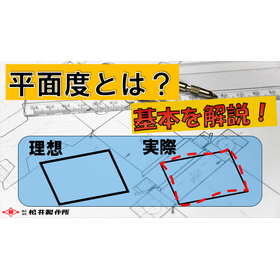
  3. What is flatness for aerospace applications? A basic explanation in 5 minutes! 松井製作所
  4. Explaining the basics of parallelism for robots! 松井製作所
  5. 4 What is geometric tolerance contour for aerospace applications? 松井製作所

Non-ferrous metal processed products Product List

1~15 item / All 16 items

Displayed results

Integrated production from hot forging to machining and assembly! [Product Case Introduction]

One-stop integrated production of non-ferrous metals! Total support for shortening product development lead times and reducing costs! Participating from the design stage and proposing value analysis (VA)!

We offer a consistent production system centered around non-ferrous metals such as copper, brass (yellow brass), and aluminum, ranging from hot forging to machining, pipe bending, brazing, and unit assembly, with optimal QCD at our three production bases in Japan and abroad (Osaka, Tottori, and China). 【Features of Integrated Production】 ■ Forging ■ Machining ■ Bending ■ Brazing ■ Assembly and Inspection ■ Short Lead Times ■ Cost Reduction *For more details, please download the PDF materials or feel free to contact us.

  • Processing Contract
  • Non-ferrous metals
  • Other electronic parts

Added to bookmarks

Bookmarks list

Bookmark has been removed

Bookmarks list

You can't add any more bookmarks

By registering as a member, you can increase the number of bookmarks you can save and organize them with labels.

Free membership registration

A must-see for those struggling with non-ferrous metal processing.

High technology does not betray quality. What our company has continuously sought since its founding is always a quality-first principle.

Non-ferrous metal processing is a niche industry, so there are very few tools available for non-ferrous metal processing, and the variety is limited. Therefore, our company uniquely processes general-purpose tools to standardize them for our use, thereby increasing manufacturing efficiency. For products made of copper and copper alloys, there are many consumables like electrodes, so surface polishing may be neglected, minor scratches may be overlooked, and some manufacturers may not pay attention to deburring even if there are slight burrs after cutting, drilling, or molding. However, our products do not have such shortcuts. In recent years, we have also started receiving orders in the fields of resin processing, rare metal processing, ceramic processing, and carbon processing. Utilizing the advanced processing technology cultivated in the manufacturing of copper products, our specialized technology enables the processing of parts in various fields, fundamentally solving our customers' "troubles." *For more details, please refer to the PDF document or feel free to contact us.

  • Non-ferrous metals

Added to bookmarks

Bookmarks list

Bookmark has been removed

Bookmarks list

You can't add any more bookmarks

By registering as a member, you can increase the number of bookmarks you can save and organize them with labels.

Free membership registration

Meiwa Corporation - Company Profile

Leave thin material processing to us! Non-ferrous metal processing utilizing plastic processing technology!

At Meiwa Co., Ltd., which handles processed products of non-ferrous metals such as aluminum and copper, we have been researching whether we can apply our long-cultivated "plastic processing technology" to the processing of non-ferrous metals. We focused on "double-sided tape," which is generally considered unsuitable for non-ferrous metal processing due to its weakness against liquids, used in plastic processing. By conducting various experiments with double-sided tape and simultaneously using a solvent that allows for easy peeling, we have contributed to many fields through "adhesive processing" and "easy peeling technology." With this technology, we achieve a product precision of 0.01mm, enabling high-precision processing. If you have any inquiries regarding "thin and small items," please feel free to contact us. 【Business Activities】 ■ Thin material machining center processing ■ Processed products made of aluminum ■ Processed products made of copper ■ Processed products made of brass ■ Processed products made of engineering plastics *For more details, please refer to the PDF document or feel free to contact us.

  • Processing Contract

Added to bookmarks

Bookmarks list

Bookmark has been removed

Bookmarks list

You can't add any more bookmarks

By registering as a member, you can increase the number of bookmarks you can save and organize them with labels.

Free membership registration

Handling products: Processed parts

We propose optimal manufacturers with technical strength, quality, and competitiveness in material + plastic processing + α.

Hashinaga Metal Co., Ltd. Product Handling In the field of processed parts, we propose optimal manufacturers with technological strength, quality, and competitiveness, combining materials + plastic processing + α. We handle precision pressing, forging, die casting, cutting, slitting, and centerless processing. Hashinaga Metal Co., Ltd. has contributed to improving the environmental performance of our major clients, including automotive and electronic component manufacturers, through products that leverage the characteristics of non-ferrous metal materials and processed parts. Moving forward, we will continue to listen to the voices (needs) of everyone in our customers' development, manufacturing, quality, and purchasing departments, and provide unique products and services (seeds) that fuse the technological capabilities of competitive material manufacturers with those of processing manufacturers possessing one-of-a-kind technology. Our ability to build over 70 years of history in the non-ferrous metal material industry is solely due to the trust established with our valued customers, suppliers, partner companies, and employees. We will continue to respond to the trust, safety, and expectations of all stakeholders with a spirit of co-creation and mutual prosperity. For more details, please contact us or refer to our catalog.

  • Other machine elements

Added to bookmarks

Bookmarks list

Bookmark has been removed

Bookmarks list

You can't add any more bookmarks

By registering as a member, you can increase the number of bookmarks you can save and organize them with labels.

Free membership registration

Master Nitec Co., Ltd. Business Introduction

Wide-ranging support for precision component needs! Professionally challenging in terms of environment and materials.

Mastanitec Co., Ltd. has been providing high-precision and high-quality products in the field of machine parts processing since its establishment. We have also ventured into low-expansion alloys such as Kovar and Invar, and in addition to processing conventional materials like aluminum, stainless steel, copper, and steel, we also include titanium steel as standard technical materials in our lineup. Furthermore, we actively handle special alloy materials with high processing difficulty, such as Invar and Kovar. 【Processing Materials】 ■ Various non-ferrous metals ■ Stainless steel ■ Aluminum ■ Copper ■ Brass, etc. *For more details, please download the PDF or feel free to contact us.

  • Processing Contract
  • Other Auto Parts
  • aluminum

Added to bookmarks

Bookmarks list

Bookmark has been removed

Bookmarks list

You can't add any more bookmarks

By registering as a member, you can increase the number of bookmarks you can save and organize them with labels.

Free membership registration

Natsume Co., Ltd. Company Profile

A specialist company skilled in the manufacturing of copper components such as electrodes and arms for resistance welding.

Our company processes and sells a wide range of non-ferrous metal products, including copper, using various processing technologies. With the introduction of water jet technology, we can now perform cutting processes for complex shapes, allowing us to delicately cut any material, including metals, ceramics, resins, stones, and foam materials (such as sponges), regardless of the type of work material. You can trust us with small lots, matching existing items, short delivery times, large-scale processing, and ultra-precision processing. 【Business Overview】 ■ Processing and sales of non-ferrous metal products *For more details, please refer to the PDF document or feel free to contact us.

  • Other machine elements

Added to bookmarks

Bookmarks list

Bookmark has been removed

Bookmarks list

You can't add any more bookmarks

By registering as a member, you can increase the number of bookmarks you can save and organize them with labels.

Free membership registration

Introduction of our non-ferrous metal products

Enjoying the aging of metal is also a pleasure of non-ferrous metals. It brings warmth and joy to everyday life.

"Akagane Craft" is our original brand of non-ferrous metal processed products. From various model products to custom-made orders, if you make a request, we will utilize our technical expertise to realize your ideal product. We take full responsibility for bringing to life the items you desire, such as nameplates, door handles, hangers, lighting, and desk clocks, from design to production. The texture changes over the years, and it is distinctly different for each product. It is truly a valuable one-of-a-kind item. 【Features】 - Warmth in color - Rust acts as a protective coating, and the material does not become brittle even if it rusts - Texture changes with age - If polished appropriately, a beautiful surface can re-emerge - Recommended for those who want to maintain shine for a long time *For more details, please refer to the PDF document or feel free to contact us.

  • Non-ferrous metals

Added to bookmarks

Bookmarks list

Bookmark has been removed

Bookmarks list

You can't add any more bookmarks

By registering as a member, you can increase the number of bookmarks you can save and organize them with labels.

Free membership registration

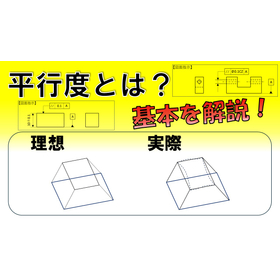
Explaining the basics of parallelism for robots!

Contributing to the improvement of robot motion accuracy!

In the robotics industry, precise positioning and assembly of each component are required to ensure product quality and safety. Particularly in robots that demand high precision, the parallelism between parts significantly affects operational accuracy. Deficiencies in parallelism can lead to misalignment and vibrations, potentially resulting in product defects or accidents. This video explains the basics of "parallelism," a type of geometric tolerance. It covers the definition of parallelism, examples of its use, how it is represented in drawings, and points to consider when using it, contributing to the improvement of robotic operational accuracy. 【Application Scenes】 - Precision equipment assembly robots - Inspection robots - Transport robots 【Effects of Implementation】 - Improved operational accuracy of robots - Enhanced product quality - Reduction of defective products

Added to bookmarks

Bookmarks list

Bookmark has been removed

Bookmarks list

You can't add any more bookmarks

By registering as a member, you can increase the number of bookmarks you can save and organize them with labels.

Free membership registration

What is geometric tolerance contour for aerospace applications?

Deepen the understanding of contouring in the aerospace field!

In the aerospace industry, high precision of parts is required. Especially for components related to the safety of aircraft, it is important to maintain the shape as per the design drawings. A lack of understanding of contour tolerance can lead to manufacturing errors and performance degradation of parts. This video explains the basics of "contour tolerance," which is a type of geometric tolerance. It covers the definition of contour tolerance, examples of its use, how it is represented on drawings, and points to consider when using it. We hope this video will help improve the precision of parts in the aerospace field. 【Application Scenarios】 - Design and manufacturing of aircraft parts - Design and manufacturing of space development-related components - Quality control of parts that require high precision 【Benefits of Introduction】 - Improved drawing interpretation skills - Enhanced manufacturing precision of parts - Increased efficiency in quality control

Added to bookmarks

Bookmarks list

Bookmark has been removed

Bookmarks list

You can't add any more bookmarks

By registering as a member, you can increase the number of bookmarks you can save and organize them with labels.

Free membership registration

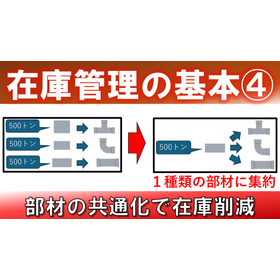
【For Machine Tools】Inventory Reduction! Standardization of Components

Standardizing materials to solve inventory management issues!

In the machine tool industry, managing a diverse range of components can be a challenge in unit manufacturing. Issues such as increased inventory costs and shortages of necessary components can lead to decreased production efficiency. This video explains the standardization of components as a fundamental aspect of inventory management in manufacturing. Standardizing components contributes to inventory optimization and the establishment of an efficient production system. 【Usage Scenarios】 * Inventory management in unit manufacturing of machine tools * Procurement of components in small-batch, high-variety production * Companies aiming for cost reduction 【Benefits of Implementation】 * Reduction in inventory costs * Rapid procurement of necessary components * Improvement in production efficiency

Added to bookmarks

Bookmarks list

Bookmark has been removed

Bookmarks list

You can't add any more bookmarks

By registering as a member, you can increase the number of bookmarks you can save and organize them with labels.

Free membership registration

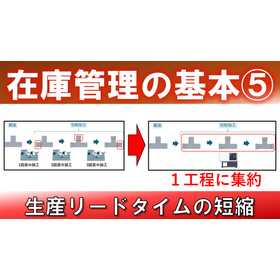
Production lead time reduction for the machinery manufacturing industry! Manage delivery deadlines!

Explaining the benefits of reducing production lead time!

In the machinery manufacturing industry, effective deadline management is crucial to meet the diverse needs of customers. A long production lead time can lead to delays in delivery and increased inventory, potentially resulting in decreased customer satisfaction and higher costs. This video explains the shortening of production lead times as a fundamental aspect of inventory management. 【Usage Scenarios】 - Companies facing challenges in deadline management - Companies aiming to reduce inventory - Companies looking to improve production efficiency 【Benefits of Implementation】 - Mitigation of the risk of delivery delays - Reduction of inventory costs - Improvement in customer satisfaction

Added to bookmarks

Bookmarks list

Bookmark has been removed

Bookmarks list

You can't add any more bookmarks

By registering as a member, you can increase the number of bookmarks you can save and organize them with labels.

Free membership registration

What is flatness for aerospace applications? A basic explanation in 5 minutes!

A must-see for quality assurance personnel! A 5-minute explanation of the basics of flatness.

In the aerospace industry, the accurate dimensions and shapes of components are crucial for ensuring the safety and reliability of products. In particular, aircraft parts require a high degree of precision, as even slight errors can lead to serious accidents. Flatness is an important geometric tolerance for evaluating the accuracy of a part's flat surface, and quality assurance personnel need to understand its definition, usage, and points of caution. This video will clearly explain the basics of flatness and deepen understanding in quality assurance operations. 【Application Scenarios】 - Quality inspection of aerospace components - Reading technical drawings - Quality control in manufacturing processes 【Benefits of Introduction】 - Deepening understanding of flatness and improving efficiency in quality assurance operations - Enhancing drawing interpretation skills - Early detection and countermeasures for quality issues

Added to bookmarks

Bookmarks list

Bookmark has been removed

Bookmarks list

You can't add any more bookmarks

By registering as a member, you can increase the number of bookmarks you can save and organize them with labels.

Free membership registration

Geometric Tolerances for Shipbuilding: What is Straightness? An Explanation of the Basics!

Helpful for hull design! Explaining the basics of straightness.

In the shipbuilding industry, precise dimension management is essential to ensure the strength and safety of the hull. Particularly in the assembly of the hull structure, the straightness of the components is crucial and greatly affects the quality of welding and joining. Deficiencies in straightness can lead to hull distortion and reduced strength, potentially resulting in serious accidents. This video explains the basics of "straightness," a type of geometric tolerance. It covers the definition of straightness, examples of its use, how it is represented in drawings, and points to consider when using it. This video aims to deepen the understanding of straightness in hull design and contribute to improving design quality. 【Application Scenarios】 - Design of hull structures - Quality control of welds - Inspection of components 【Effects of Implementation】 - Reduction of design errors - Improvement in quality - Cost reduction

Added to bookmarks

Bookmarks list

Bookmark has been removed

Bookmarks list

You can't add any more bookmarks

By registering as a member, you can increase the number of bookmarks you can save and organize them with labels.

Free membership registration

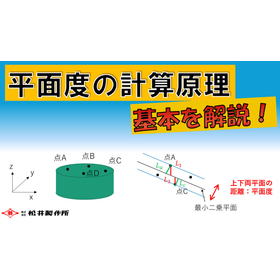
Principle of Flatness Calculation for Aerospace Applications

Explaining the principle of flatness calculation! Contributing to lightweight design.

In the aerospace industry, reducing the weight of components is essential for improving performance and reducing costs. Flatness is a crucial factor that determines the precision of components, and understanding flatness is vital in lightweight design to maintain the strength of parts while minimizing unnecessary materials. This video provides an overview of how to calculate flatness and supports problem-solving in lightweight design. 【Application Scenarios】 * Design of aircraft components * Design of spacecraft components * Design of structures requiring weight reduction 【Benefits of Implementation】 * Contributes to weight reduction of components * Enhances design efficiency * Reduces costs

Added to bookmarks

Bookmarks list

Bookmark has been removed

Bookmarks list

You can't add any more bookmarks

By registering as a member, you can increase the number of bookmarks you can save and organize them with labels.

Free membership registration

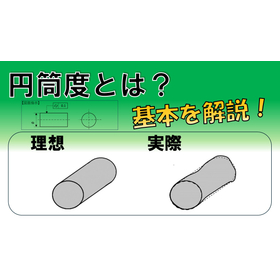
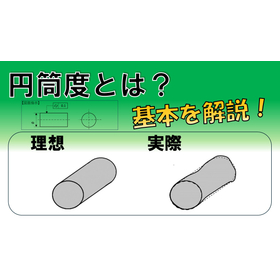
What is roundness for the energy industry? An explanation of the basics!

Helpful for pipe quality control! An explanation of the basics of cylindricity.

In the energy industry, particularly in the manufacturing and maintenance of pipelines, dimensional accuracy is crucial. If the roundness of the pipes is not properly managed, it can lead to leaks at the joints and a decrease in strength, potentially affecting the safety of energy supply. This video explains the definition of roundness, examples of its use, how it is represented in drawings, and precautions for its use. Please utilize this for pipe quality management. 【Usage Scenarios】 - Pipeline manufacturing - Pipe quality management - Drawing creation 【Benefits of Implementation】 - Improved pipe quality - Increased product reliability - Cost reduction

Added to bookmarks

Bookmarks list

Bookmark has been removed

Bookmarks list

You can't add any more bookmarks

By registering as a member, you can increase the number of bookmarks you can save and organize them with labels.

Free membership registration